Every year in South Africa, countless visas, university applications and international contracts are delayed or rejected due to improper document translation and legalisation. According to the Hague Conference, over one million apostilles are issued each year to address this issue. If terms such as ‘Hague Apostille’ and ‘Certified translations’ are unfamiliar to you, don’t worry — you’re not alone. Many South African individuals emigrating or immigrating to a country, or seeking dual citizenship, will require a large amount of documentation that must be translated and certified with a Hague Apostille.
This guide explains what Hague apostilles and certified translations are, when they are needed, and how combining apostille and certified translation services ensures that your documents are accepted abroad.
At Frenchside Translations, we offer a comprehensive, all-encompassing apostille and certified translation service to make these formalities hassle-free.
What exactly is a Certified Translation?
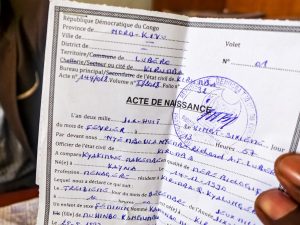
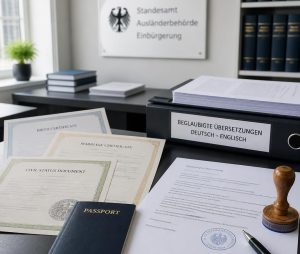
A certified translation is an official translation of a document. These translations are often required by government offices, courts, embassies and foreign employers. They are used for documents such as birth and marriage certificates, diplomas, and legal contracts.
This type of translation includes a formal statement from the translator. The translator swears that the translation is accurate and complete. Most countries accept certified translations as legal equivalents of the original documents.
When Do You Need a Certified Translation?
You may need a certified translation for many situations, especially when submitting documents across borders. If you need documents for:
- Immigration applications
- University admissions
- Work permits or job applications
- Visa processing
- Corporate filings
- Legal proceedings
Authorities require certified translations to confirm the authenticity and meaning of your paperwork. This helps prevent misunderstandings and fraud.
What’s the purpose of the Hague Apostille?
Hague apostilles are certificates affixed by officials designated by either the High Court or the Department of Foreign Affairs. They certify notarised and/or translated documents from countries that participate in the Hague Apostille Convention. They streamline and reduce the oversight requirements for some of the most common types of international paperwork. While an apostille validates the authenticity of a document, foreign authorities often require documents to be in their official language. Without a certified translation, even an apostilled document may be rejected.
Almost any official document being translated and notarised for submission to a foreign country with a different official language will require an apostille. Apostilles are most commonly used to certify documents issued by government authorities, such as:
- Administrative documents: birth, marriage and death certificates, university degree certificates, diplomas, criminal record certificates, etc.
- Notarial documents: powers of attorney, public deeds, notarial acts, affidavits, contracts, etc.
- Court documents: rulings, decrees, conciliation acts, etc.
What documents does a sworn translation with apostille consist of?
A sworn translation with apostille consists of four documents:
- the source document, which is the document you wish to translate;
- the apostille of the source document, acknowledging that the source document is genuine;
- the sworn translation of the source document;
- the apostille of the sworn translation, confirming that the translation was effectively carried out by a sworn translator.
Navigating the process of legalising international documents can be overwhelming, but apostille services can make it more manageable by ensuring that your paperwork is recognised globally. Whether you’re moving abroad, studying overseas, expanding your business or resolving legal matters, apostilles are a critical step. Combining them with certified translations ensures compliance and clarity for foreign authorities.
Legalisation and translation of documents in Pretoria
If you have already had your documents apostilled, or are awaiting an apostille and require a certified translation, Frenchside Translation can help. We provide certified translation services for English, French, German, Portuguese and Spanish.
Our trusted team handles and coordinates the entire translation and legalisation process to make it as swift as possible. Our partners are based in Johannesburg, Pretoria and Cape Town.
Contact Frenchside to request a quote for your Hague Apostille and certified translations or to confirm the specific requirements for your destination country before starting the process. Tel: 012 348 3134 | Mobile: 081 347 6060 | Email: info@frenchside.co.za